




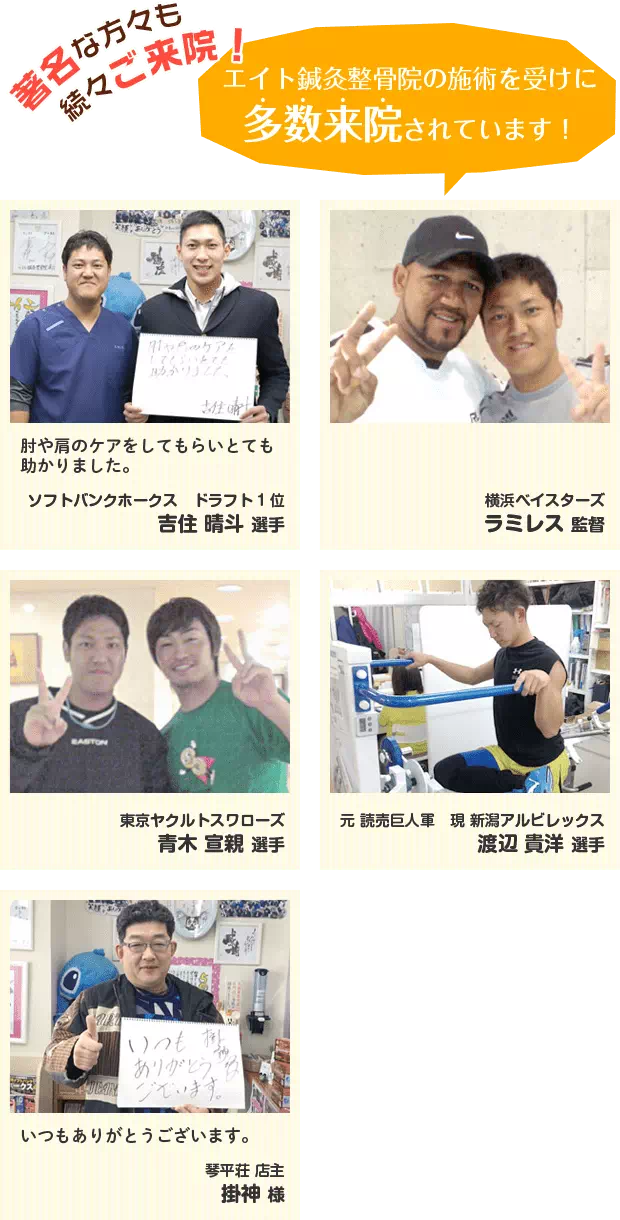

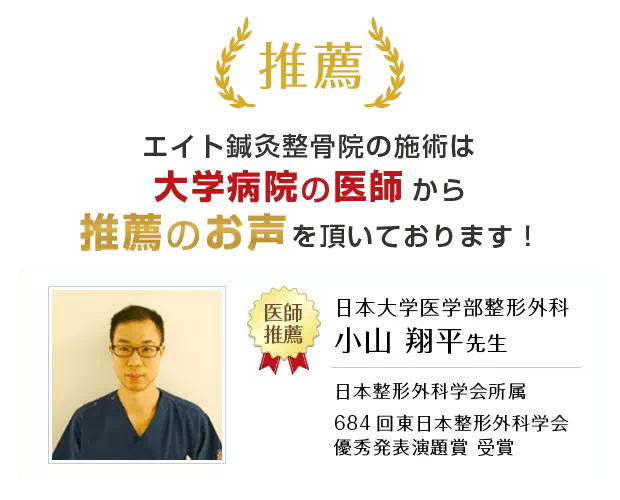
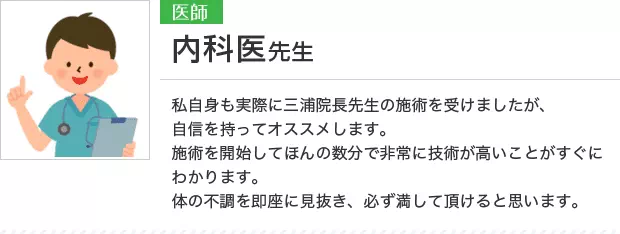
この度、エイト鍼灸整骨院さんの三浦先生に施術をしていただき、以前より痛めていた肩の疼痛が改善し、非常に動かしやすくなりました。
さらに私は仕事(手術)で中腰になることが多いのですが、それにより抱えていた腰痛も改善したように思います。 整形外科医として先生方の施術の技量に感銘を受けた次第です。
また、施術中に患者様に対する三浦先生の考えをお聞きし、日夜施術の知識と技術を向上させるために努力なさっている様子を拝見し、非常に信頼できる先生だと感じました。
エイト鍼灸整骨院さんの患者様に対するお考えは、医師である私も考えるところが多く、非常に勉強になりました。
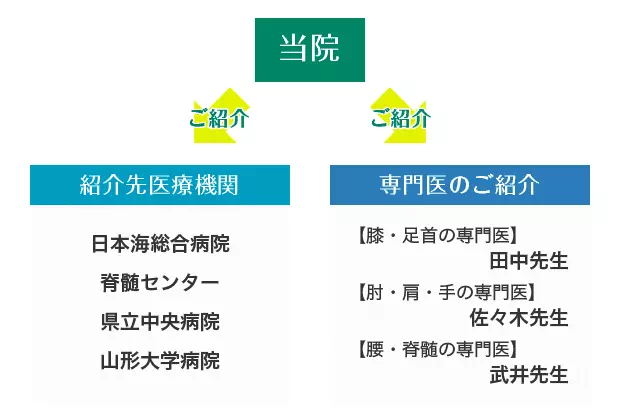
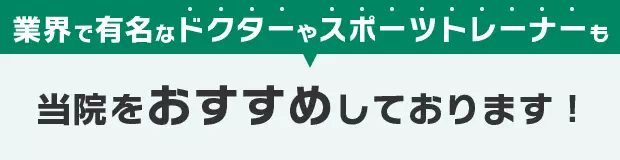
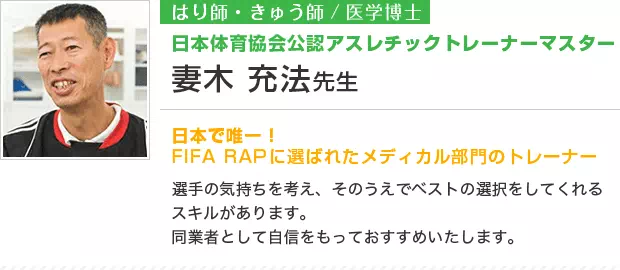
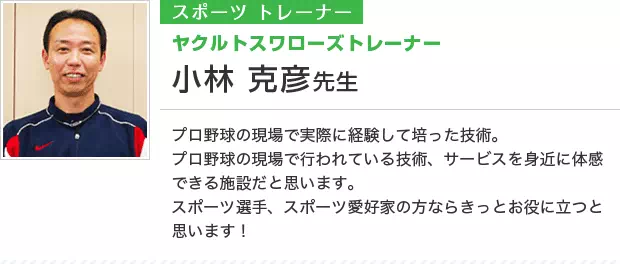
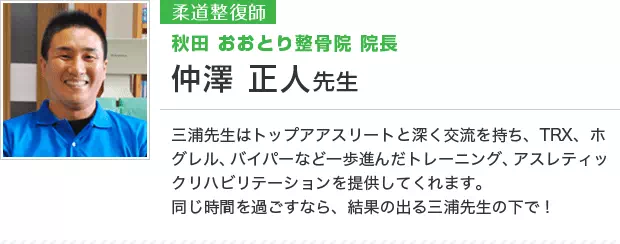
もしお身体の不調をお持ちの方がいらっしゃいましたら、エイト鍼灸整骨院さんで施術を受けることを推薦いたします。











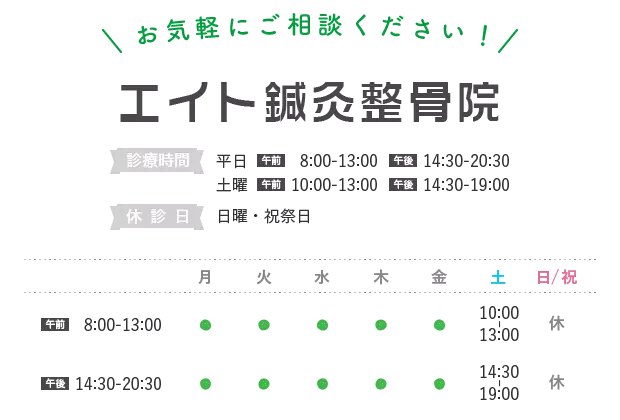
【7/16(月)以降】一部枠に空きがございます!
※予約は埋まりやすい為、候補をいくつかいただけますと予約が取りやすいです。
まずはお電話下さい!


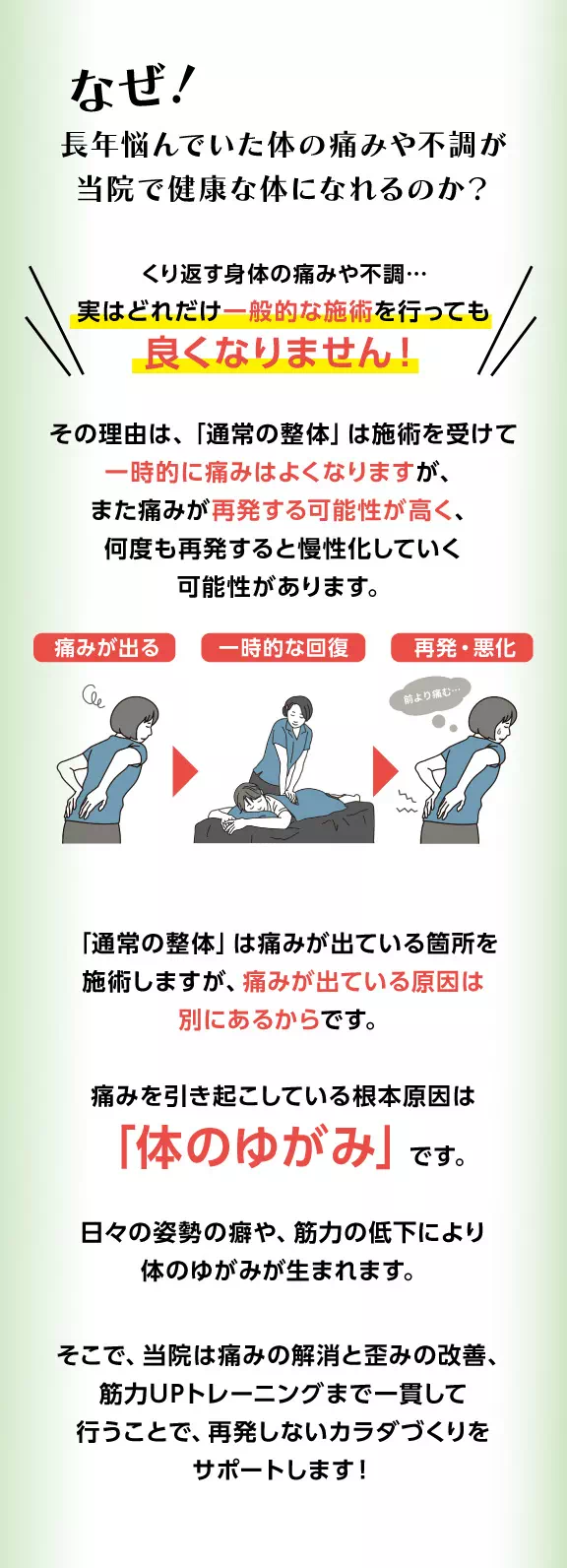
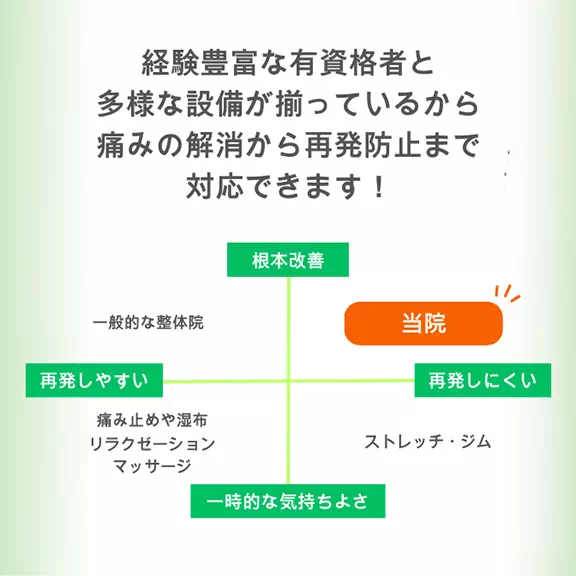
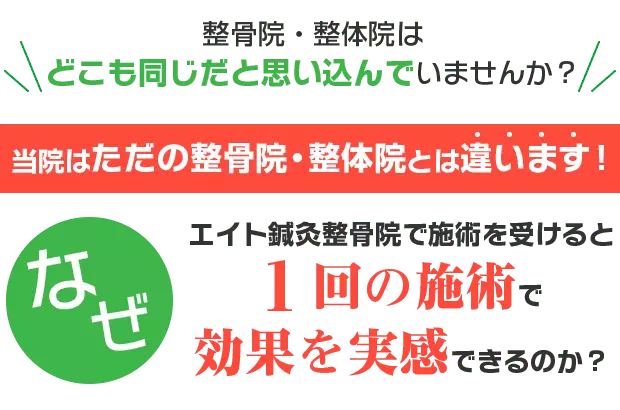
他の治療院、整体院さんではその場しのぎでマッサージを行い、痛みを和らいで終わってしまうことが多々あります。
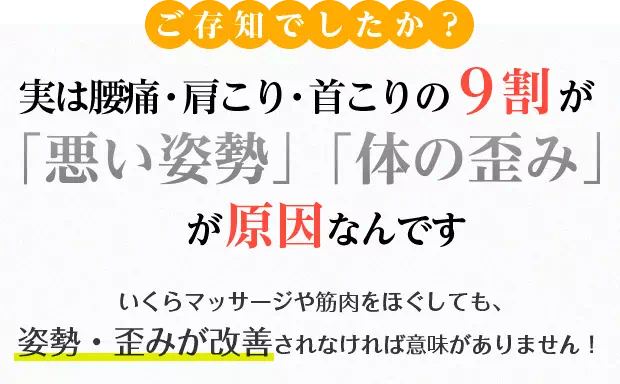
しかし、痛みの原因を改善していないと痛みは再発してしまいます。
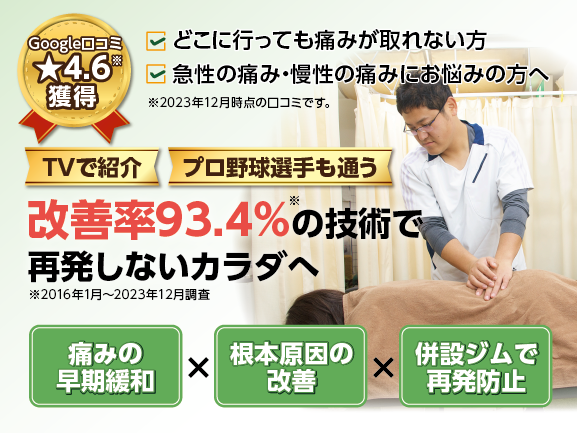
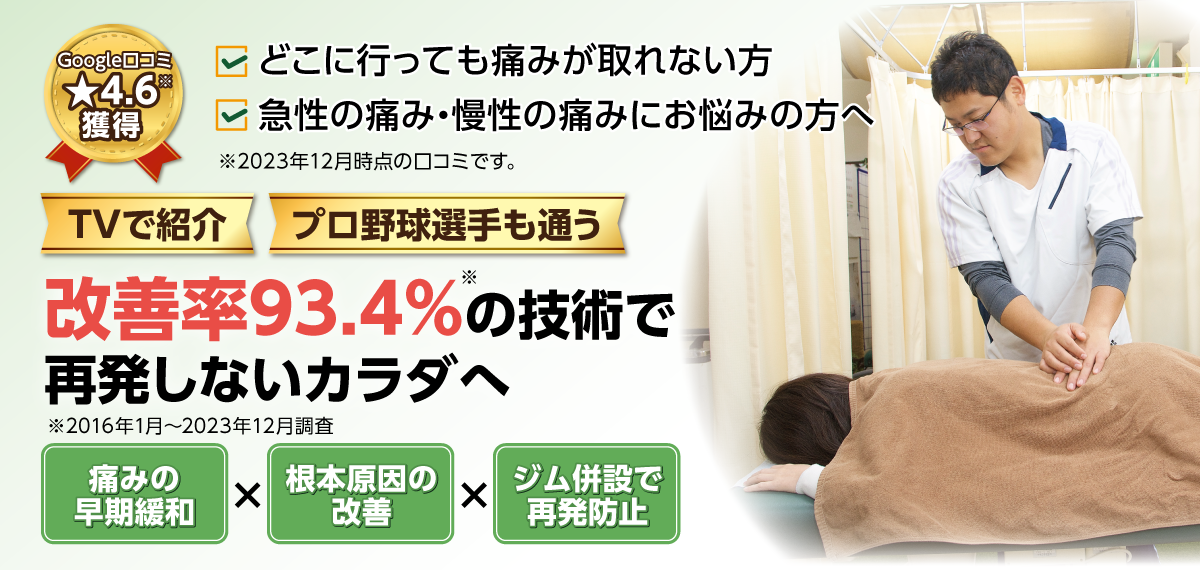
当院では痛みの原因、根本改善を目的としておりますので、再発することがとても少ないです。


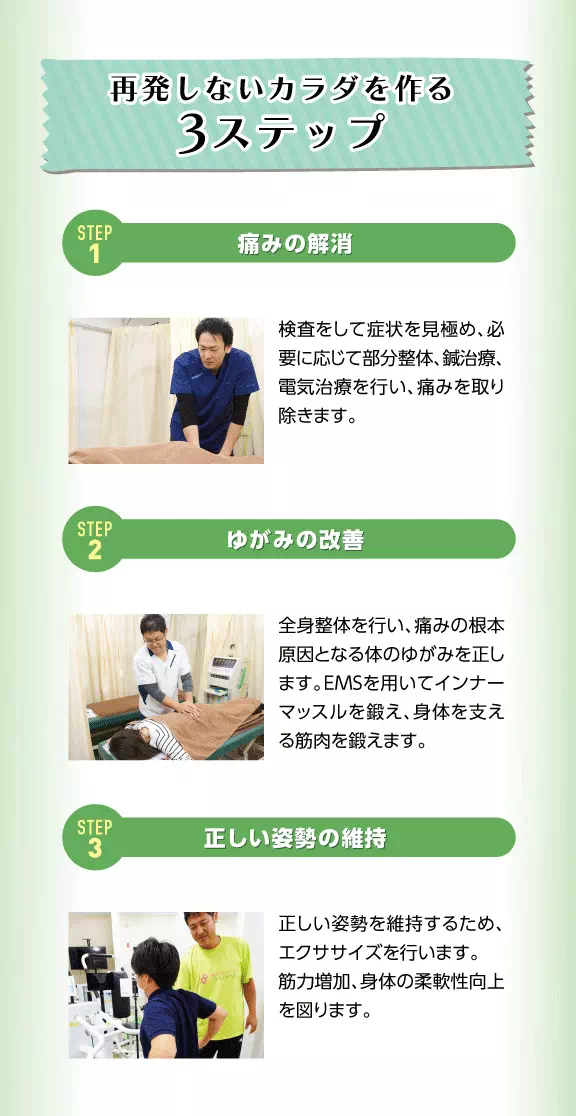
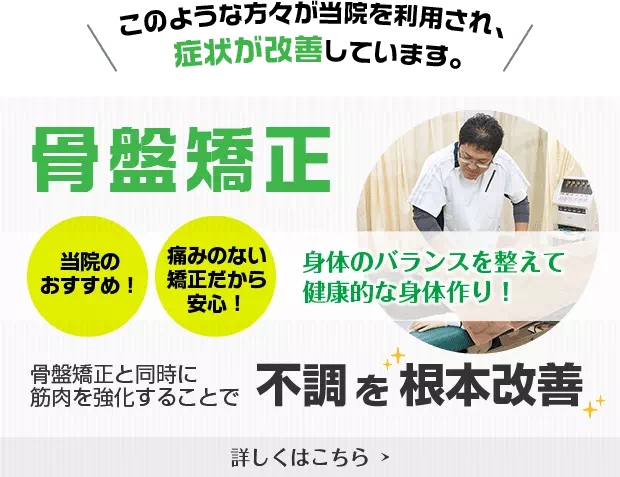
整骨院や整形外科は痛みを取り除くスペシャリスト。整体院は根本的な原因を取り除くスペシャリスト。どちらか一つというより両方行うことで痛みも改善しながらまた痛みが出ないようにするための体作りも行うハイブリット施術を採用していることが早く改善できる特徴です。
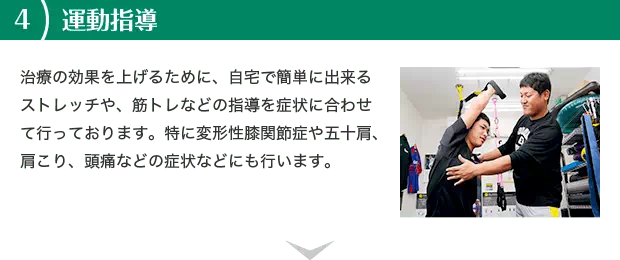
またスポーツトレーナーという資格を活かして筋力強化も行い正しい骨格を保持するための筋トレを行っていくことによって更なる根本改善をしていきます。
最近の整骨院では根本改善を行う院が多くなったが、その先の筋力強化を提供している院は数少ないです。

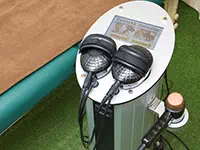
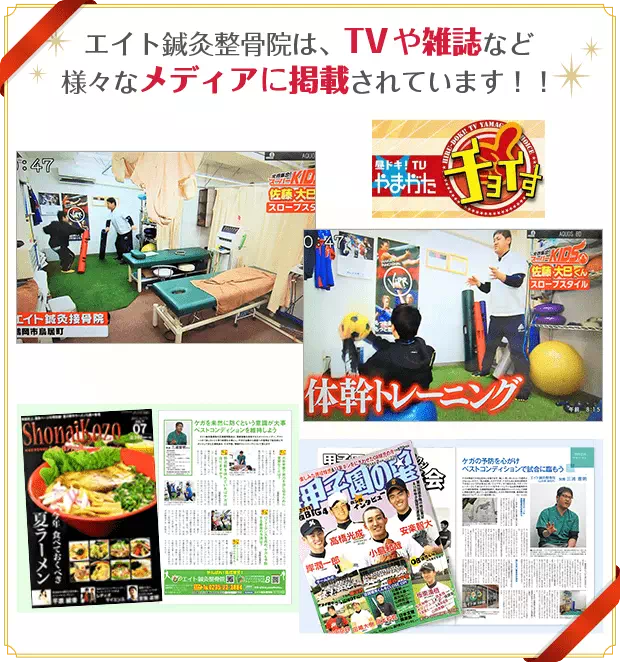
山形ではまだ導入数が少ない特殊な医療機器を何種類か導入しています。
そのことにより様々な症状に対して最善の処置を行うことができます。

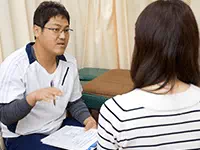
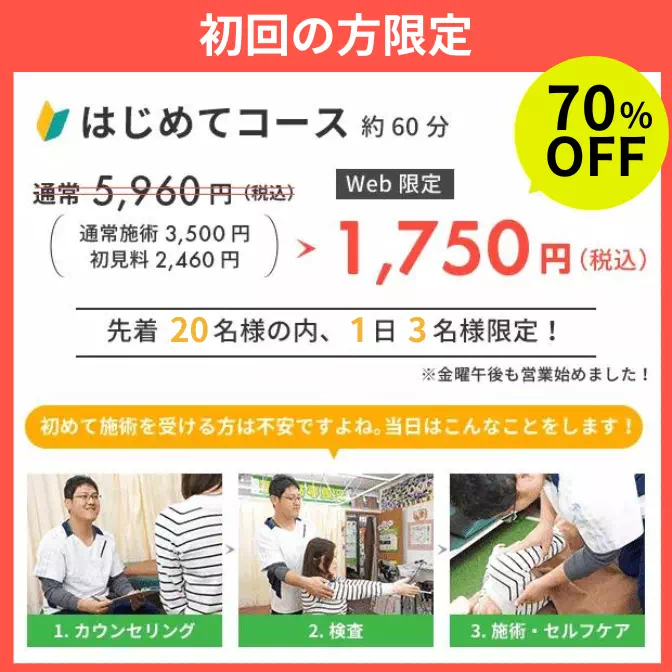
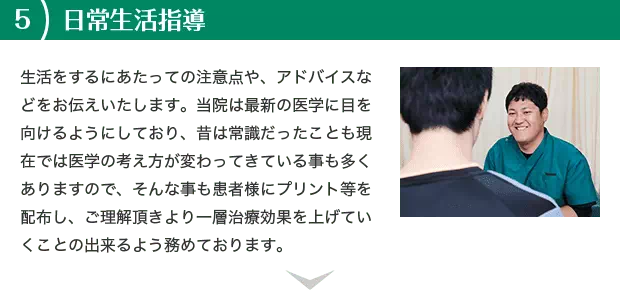
当院ではなぜ痛みが出てしまっているか?今後どのように施術を行っていくことで症状が改善するかを患者さんが理解できるまで細かく説明していきます。
説明を聞いていただいて納得していただいたうえで施術を受けていただいています。
そのことにより自分の体を理解し、私生活でも自分自身で注意することができ、症状が出にくい体を作ることができる。

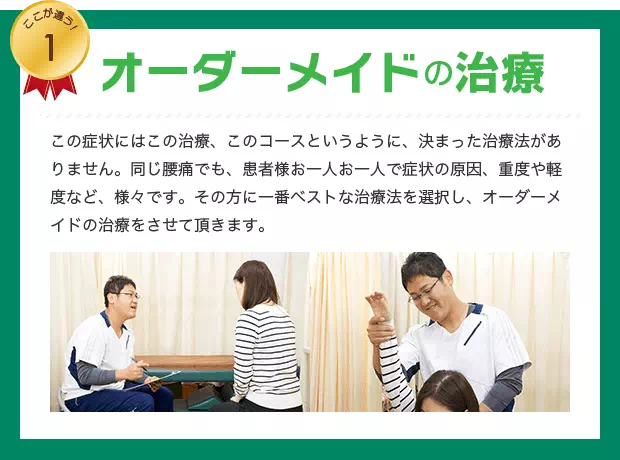
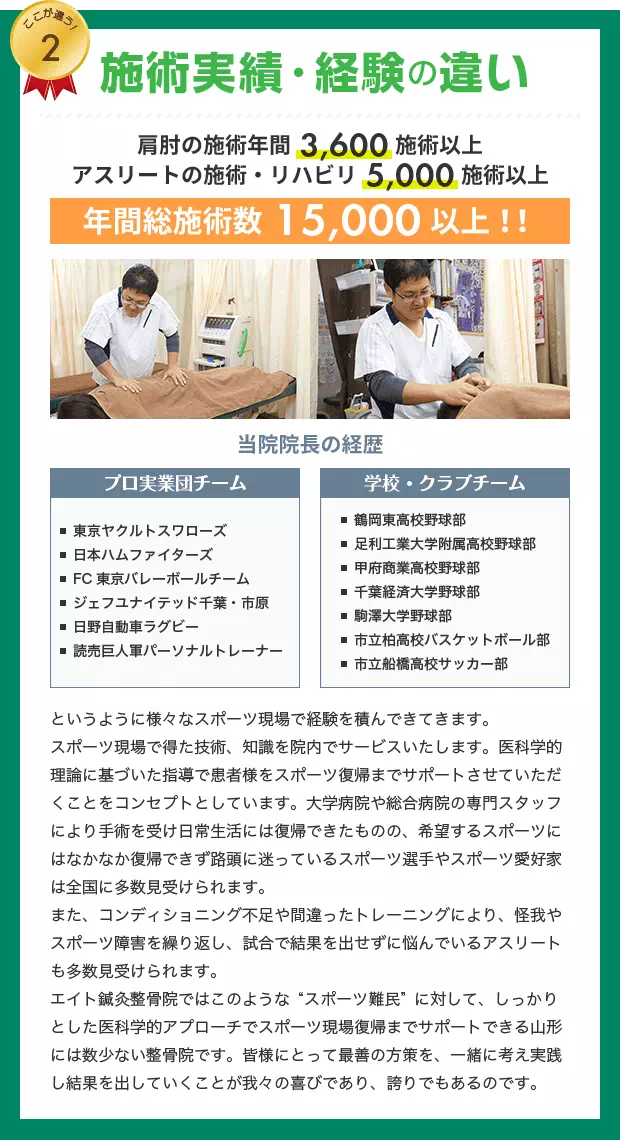

こんにちは。
エイト鍼灸整骨院の三浦 憲明です。
数あるホームページの中から、わたし達の鍼灸整骨院を選んでいただき、ありがとうございます。
わたしが「エイト鍼灸整骨院」をはじめたきっかけについて少しお話しさせていただきます。
わたしは、学生時代、野球に没頭する毎日を送っており、ケガをすることも多く、たびたび整骨院でお世話になっていました。
お世話になった整骨院の先生のおかげで、ケガに悩んでいたわたしは野球を思いっきりする生活を送ることができました。
「自分と同じように悩んでいる人を減らして、思いっきりスポーツができるようにしてあげたい」
このように、わたしは考えるようになりこの道に進みました。
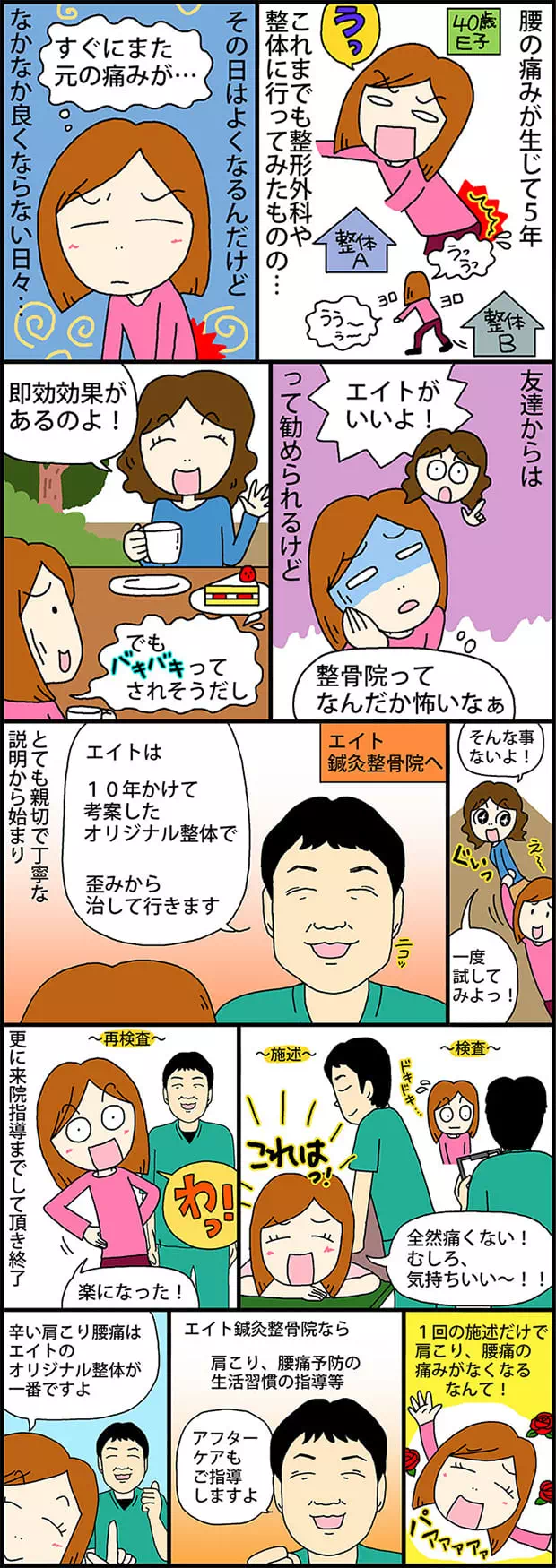
今でも患者様に相談されることがあります。整形外科に行ったら2時間待たされて診察時間はたったの2分。
骨には異状ないね。痛み止めとシップを処方しておきますので様子を見てください。
痛みがある場合はまた来てください。
本当にこれで改善するのでしょうか?
と相談されることがあります。
こんな思いでいる方はまだまだ数多くいらっしゃるのではないでしょうか?
私はこのように困っている方々を何とか助けてあげたい。何か協力することはできないかという思いで開業いたしました。
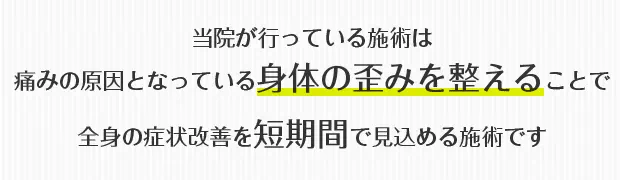
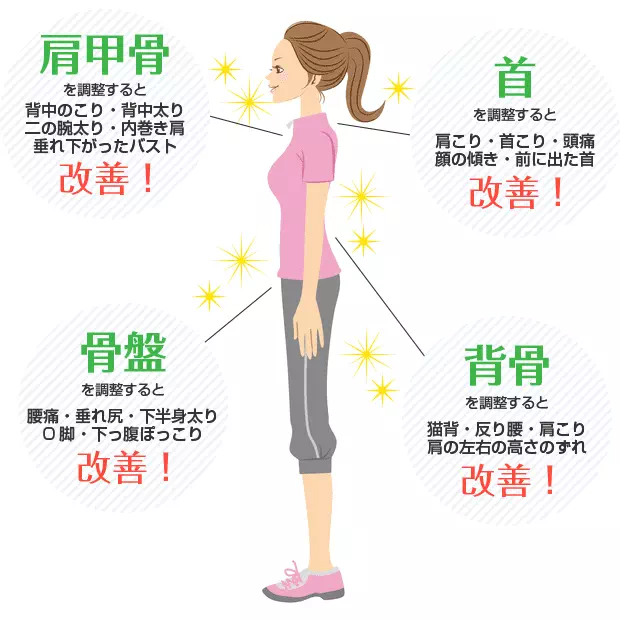
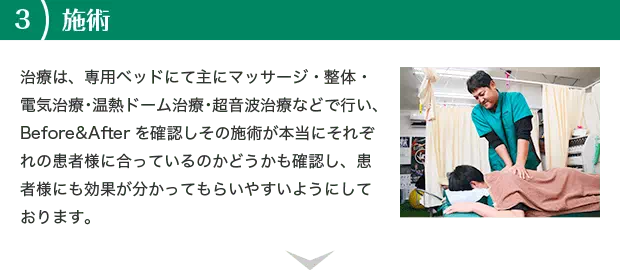
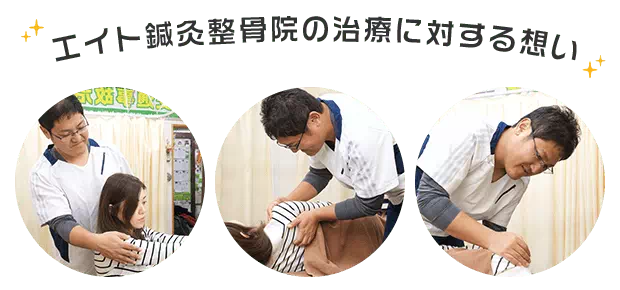
わたしの整骨院は、痛みを取る施術と歪みを取る施術を同時に行うハイブリッド施術で根本的な部分の改善を行います。
カウンセリングを丁寧にすることによって、本当の原因を探り、施術を提供していますので、やりたいことが思いっきりできるように
何度も痛みをくりかえすことのないカラダ作りといったことを可能にするのが当整骨院の特徴です。
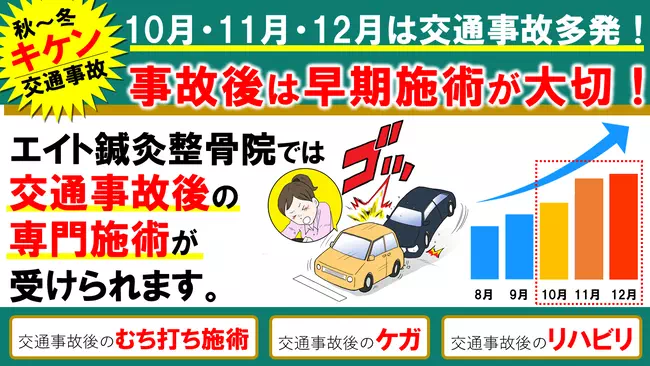
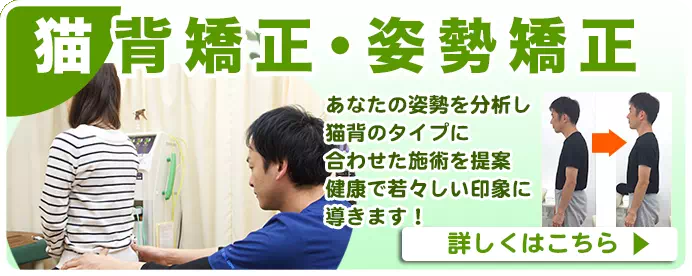
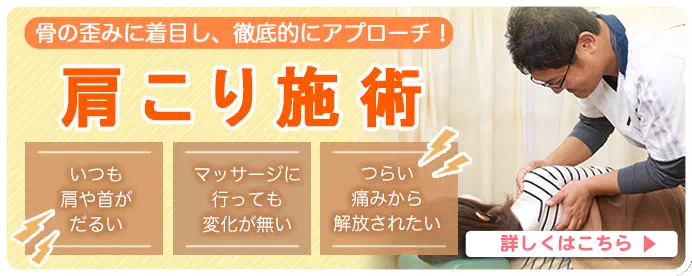
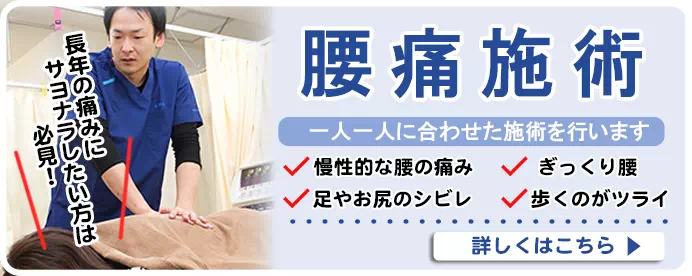
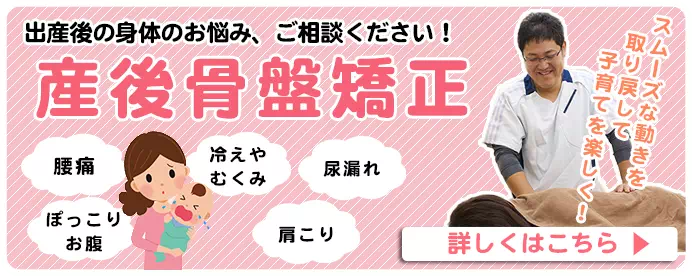
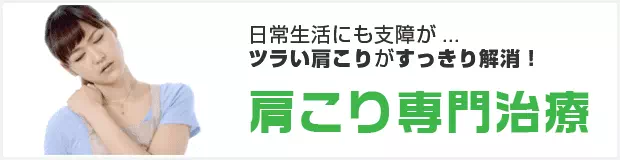
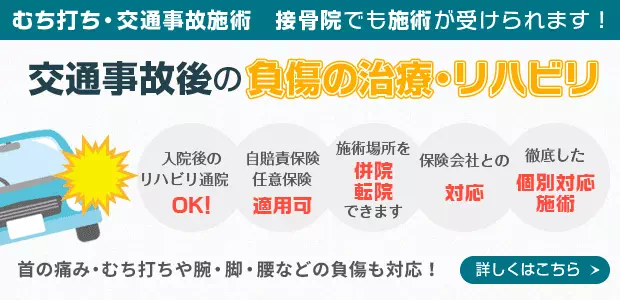
スポーツ関係の方や、学生さん、長年の痛みに悩んでいる働く女性のみなさん、交通事故によるケガ、長年改善しない腰つう・肩こり、骨盤のゆがみからくるカラダの不調、体型の変化などでお悩みの方、お気軽に、「エイト鍼灸整骨院」にご相談ください。
みなさまに感謝と思いやりの施術を提供し、カラダの不調を改善するだけではなく、生活の中に笑顔があふれる毎日になりますようしっかりとサポートしていきます。
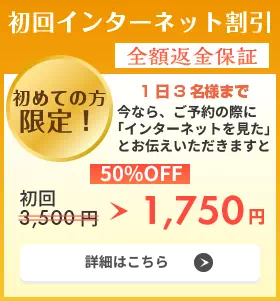
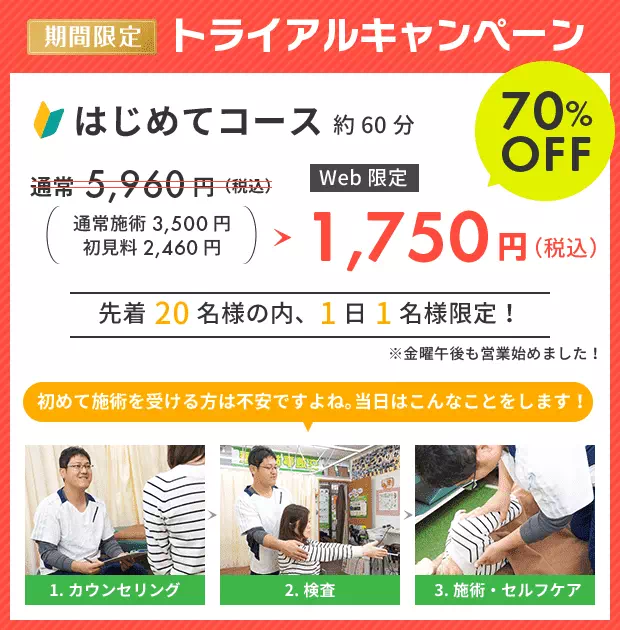
6/30(木)までに電話予約またはWeb予約で
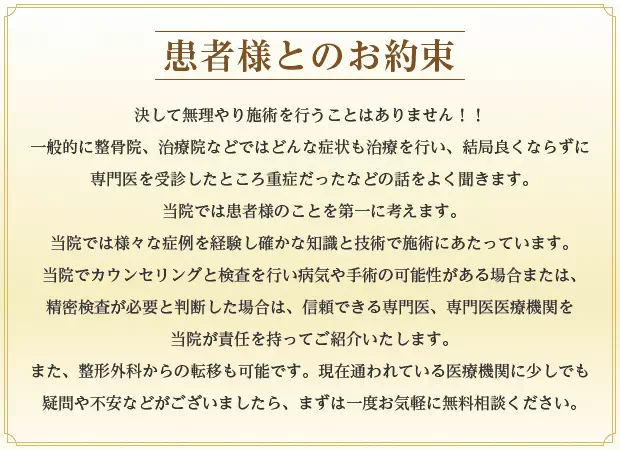

エイト鍼灸整骨院では、患者様の利益を第一に考えております。
万が一施術にご満足いただけない場合は、費用を全額返金させて頂きますので、遠慮なくお申し付けください。
※申込みは初回施術から3日以内です。
万が一、3日を過ぎてお申込みをされても、ご返金は出来かねますので、予めご了承くださいませ。(初回施術限定となっております。)